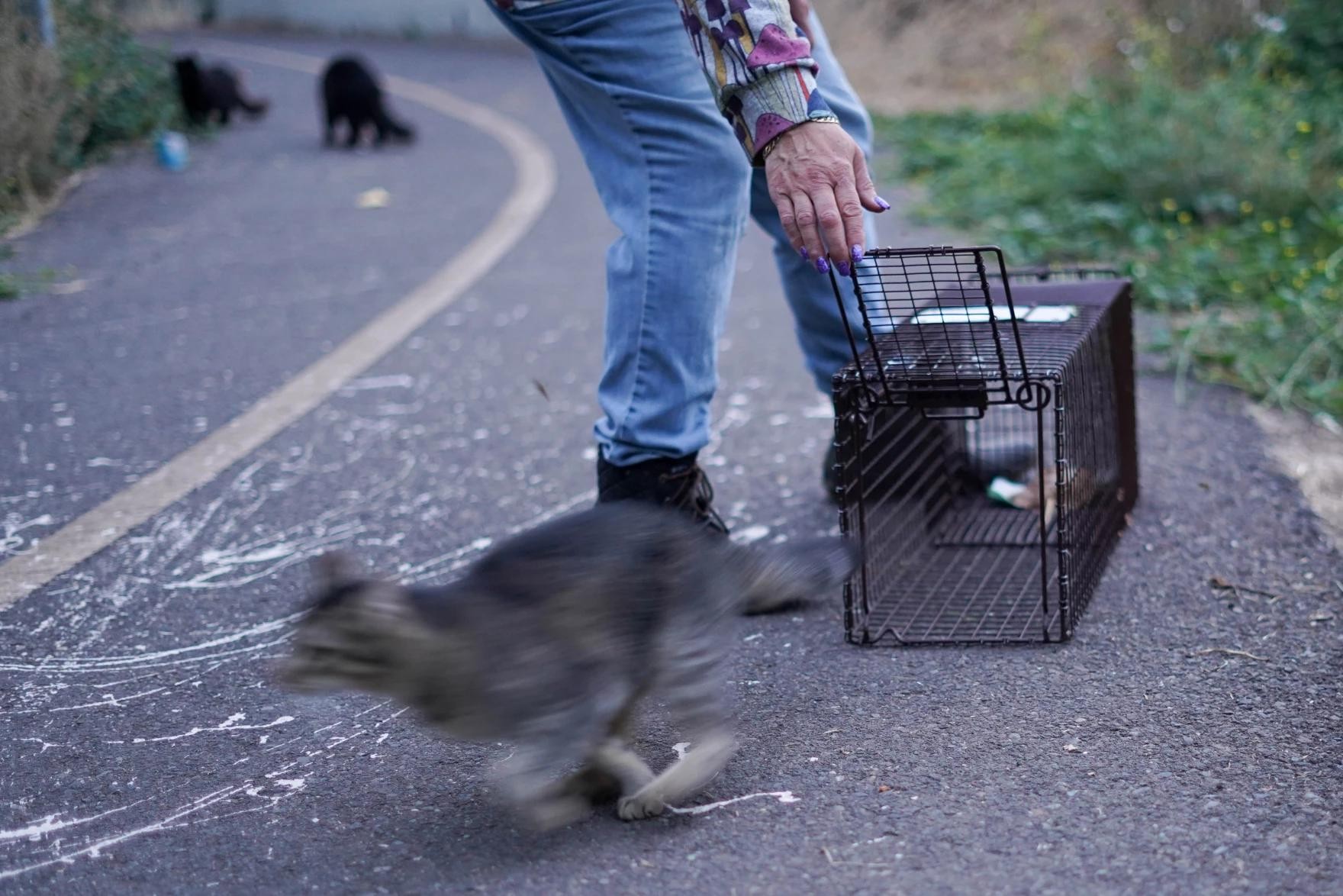
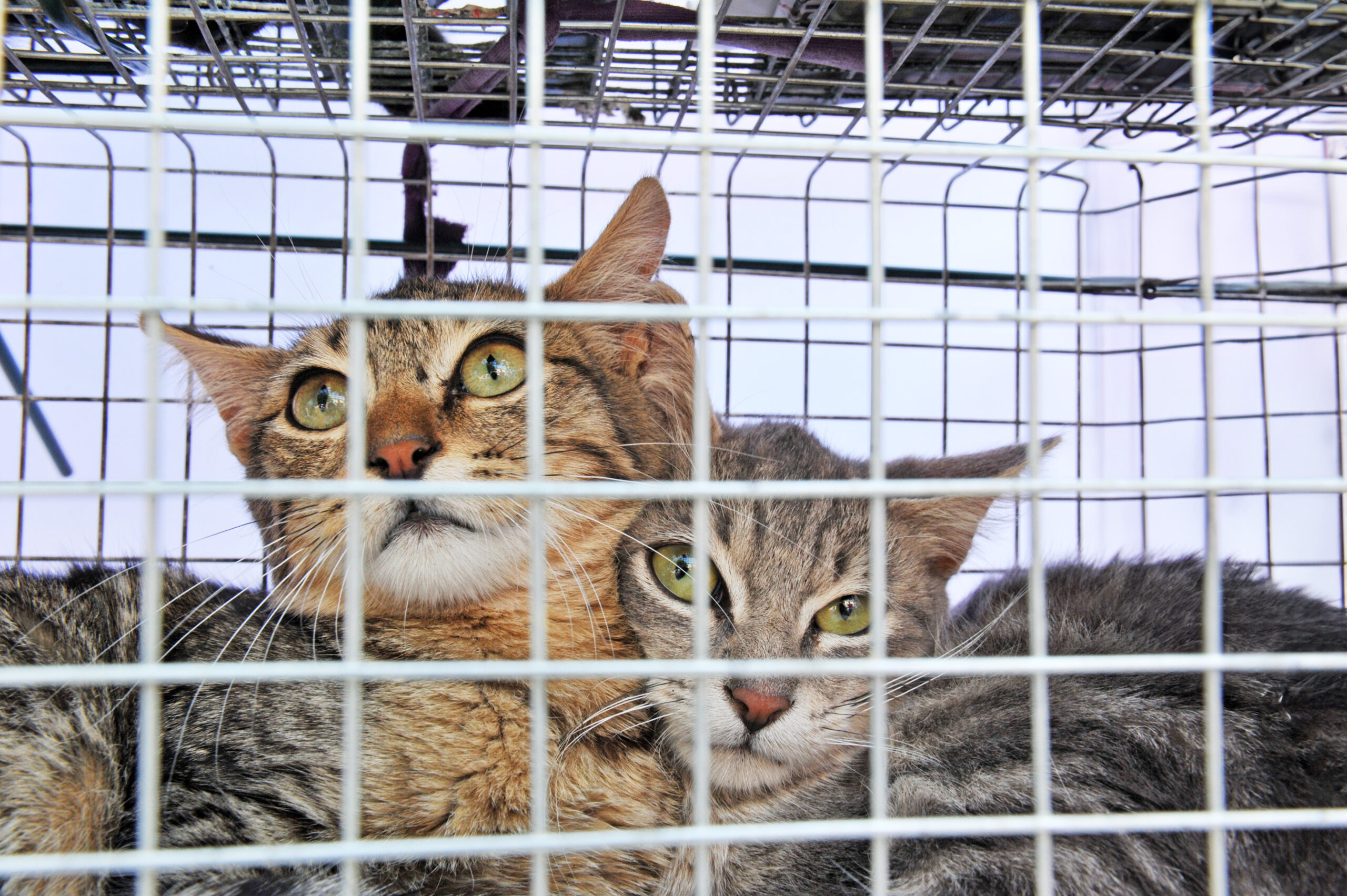
Thank you for caring so much about your community and its stray cats! We are incredibly grateful that you're willing to take the next steps in TNVR and help community cats in your area.
Click here for a short video overview of the end-to-end process and refer to the step-by-step guide below.
Check with your county animal services, local shelters, and humane societies. Many offer low-cost or free spay/neuter surgeries that will also include a rabies vaccine and an ear tip (the universal symbol that the cat has been sterilized — the tip of the left ear is surgically removed while the cat is sedated).
Their website will outline how to secure an appointment, the cost, and logistics like drop-off and pick-up times.
Most places that do TNVR surgeries also provide traps for a refundable deposit or small rental fee.
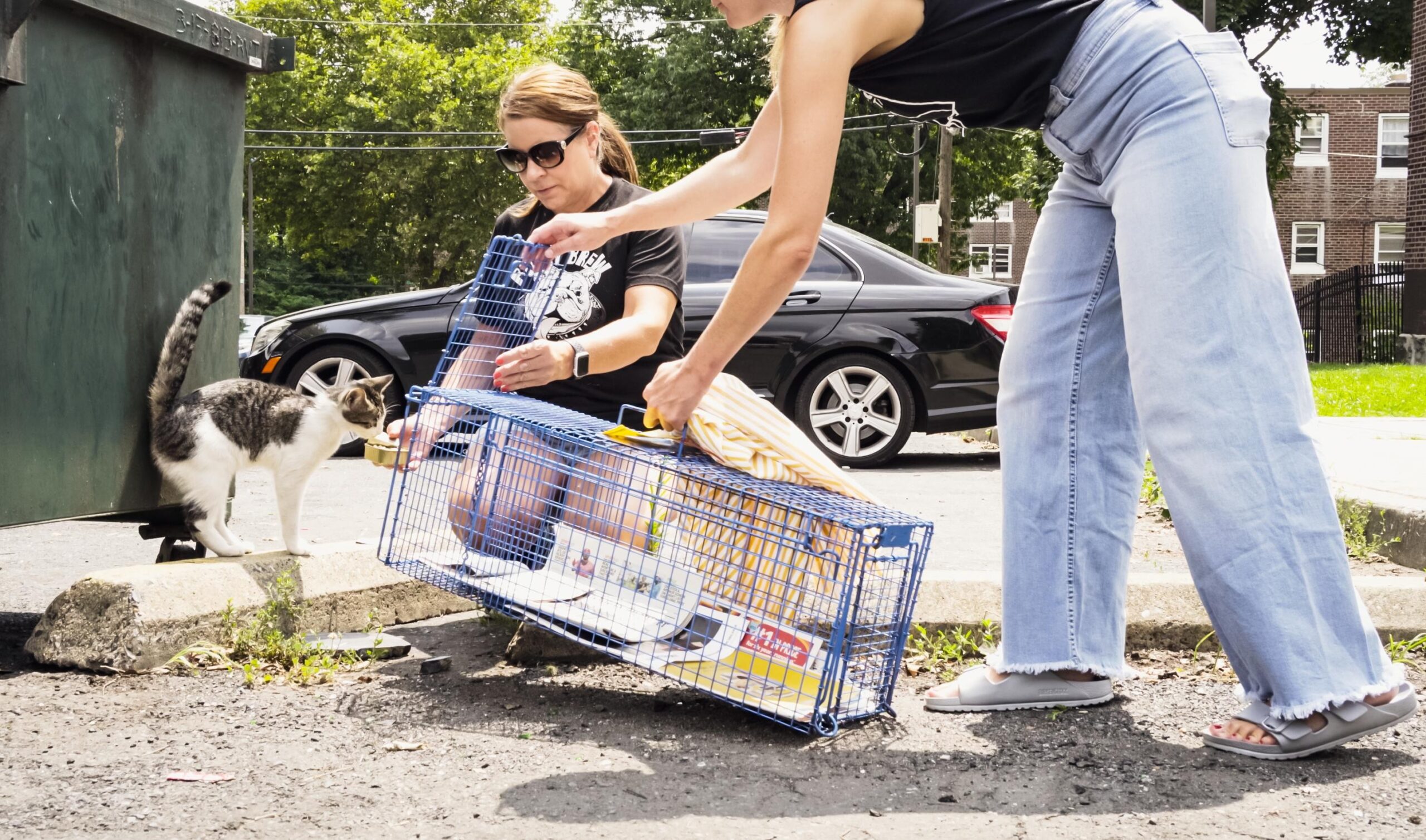
Get the cat on a feeding schedule before trapping by feeding at around the same time every day. Cats are often more active around 5–7pm, making it a good feeding time, but mornings can work too. Community cats tend to hide and sleep during the day.
Getting them on a feeding schedule makes it more likely they will show up when you want to trap. Once the cats are consistently showing up for meals, you can plan a day to trap.
If you're not trapping on your own property, it's a good idea to let owners or neighbors know what you are planning to avoid any issues on trapping day.
Review the weather for your planned trapping day to ensure there's no rain at trapping time — cats will be less likely to show up in wet conditions. Do not feed the cat the day before you are trying to trap. You need the cat to be hungry!
Prepare the trap by placing a piece of cardboard or layered newspaper in the bottom. Cats are often more comfortable walking on a solid surface, and it can help prevent escapes during trapping.
Food only goes in the trap (in the back, on the opposite side from the entrance) once you are ready to trap. You can also put small amounts of food at the entrance and halfway in to entice the cat to enter and walk toward the bait.
Prepare your vehicle for transporting by placing a shower curtain liner, tarp, pee pads, or other waterproof covering underneath the traps to protect your vehicle and make cleanup easier.
Set up the trap near where you feed the cats. Near a bush, wall, or fence is helpful — cats tend to be more comfortable along edges rather than out in the open. It's also helpful to drape a sheet or towel over the back half of the trap so the cat feels more secure.
Set the trap with the bait and walk far enough away not to be noticed, but close enough to see when the trap is triggered.
Some cats are very trap-shy, so it may take a couple of attempts to catch them. Just go back to your feeding schedule and try again in a few days. You can also try different types of food — tuna, sardines, even Kentucky Fried Chicken (yes, seriously!) — anything very smelly works well.
Be sure to take the traps with you. DO NOT leave a set trap overnight or all day.
Good job! Immediately cover the entire trap with a sheet or towel. This helps the cat remain calm and reduces stress.
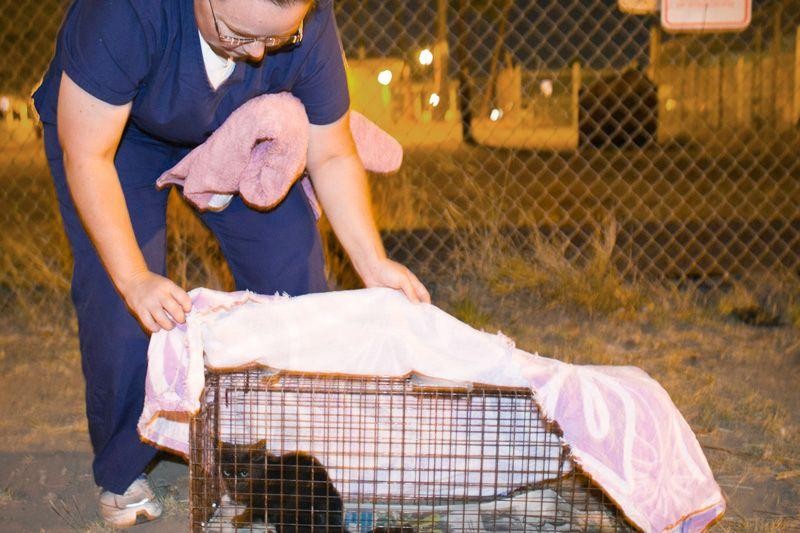
Keep the cat in the covered trap in a safe, quiet, temperature-controlled location — such as a garage, laundry room, or enclosed porch — until your sterilization appointment. Check with your clinic regarding fasting requirements before drop-off, as most require food to be withheld for a period of time before surgery. You may provide a small amount of water in the bait end, but do not open the door completely to prevent the cat from escaping. It's helpful to place a pee pad under the trap.
Before dropping off, use tape to label the trap with:
If your cat appears sick or injured, note that on the trap as well and alert the check-in person at drop-off.
Also take a photo of the cat before drop-off so you can verify you receive the correct cat back. While uncommon, mix-ups can happen.
Once your cat is returned after surgery, keep the cat in the trap for 1 day if male and 2 days if female, unless otherwise directed by the clinic.
A few hours after surgery, once the sedation has worn off, provide food and water while keeping the cat in a safe, quiet, temperature-controlled location. Open the trap only as much as needed to slip in food and water as cats can be unpredictable and look for any opportunity to escape.
The clinic should alert you to any medical conditions they discover, such as a lactating female, a spay-abort, an injured cat, or any cat with post-surgical concerns. You should also ask when you pick them up. They can provide any special post-surgery instructions. Nursing mothers may require a modified recovery plan depending on the age and condition of their kittens, be sure to ask the clinic how to proceed.
What to watch for:
Once the cat has completed the recovery period and seems healthy and alert, release the cat at the location where it was trapped. Return the trap to get your deposit back.
Congratulations! You just saved dozens of kittens from being born into a life on the street. Thank you for making your community healthier and safer for community cats.